
Stop Sounding Vague
How to use the Ladder of Abstraction to improve your public speaking

It’s been over a year since I’ve written. Thanks for sticking around.
Our gym is now over a year old, my baby is no longer a baby, and we’ve hired our first full-time employee.
And here I am, with something I haven’t had in a long while—time and focus.
Although I haven’t written in a while, I’ve continued to coach individuals and groups on how to improve their communication and public speaking skills.
A conceptual framework I’ve found myself referencing recently is the Ladder of Abstraction.
It’s an important framework for you to understand because it will reveal gaps in your understanding that can undermine the effectiveness of your message.
It’s also a tool you can use to (1) prevent vagueness, (2) prevent information overload, and (3) help you adapt in real-time as you ‘read’ your audience while you speak.
The Ladder of Abstraction
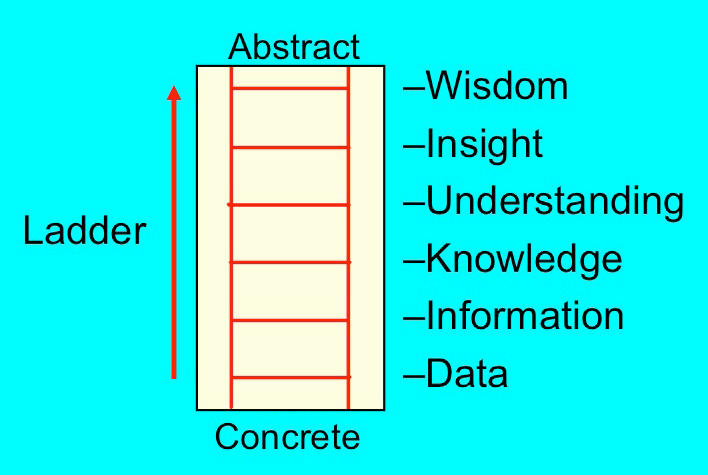
The Ladder of Abstraction, developed by S.I. Hayakawa, is a conceptual framework that visualizes the spectrum of language specificity. Each rung represents a level of abstraction.
At the top of the ladder, you use abstract, broad, and general language (think concepts, categories, big ideas, etc.).
If I were at the top of the ladder talking about strength training, I might say, “Building strength helps you cultivate resilience, confidence, and long-term well-being.” (broad and conceptual)
If I were at the top of the ladder talking about food tracking for weight loss, I might say, “Tracking your macros helps you create alignment between your eating habits and your weight-loss goals.” (broad and conceptual)
If I were at the top of the ladder talking about my (sport) team’s philosophy, I might say, “This season, we’re building more than a team—we’re building a standard. Our goal is to become a group that shows up with discipline, accountability, and respect for the work and for each other.” (broad and conceptual)
At the bottom of the ladder, you use concrete, detailed, and specific language (think facts, examples, data, etc.).
If I were at the bottom of the ladder talking about strength training, I might say, “It’s noticing you can get up off the floor with a little more ease than last month, or carry all the groceries in one trip because your grip strength has improved.” (concrete and specific)
If I were at the bottom of the ladder talking about food tracking for weight loss, I might say, “It looks like opening your food-tracking app before dinner and noticing you still need about 20 grams of protein, so you add a grilled chicken breast instead of extra pasta. Or realizing you’ve hit your carb goal for the day, so you swap the tortilla for a lettuce wrap. These small, informed choices—made one meal at a time—are what help you lose weight.” (concrete and specific)
If I were at the bottom of the ladder talking about my (sport) team’s philosophy, I might say, “That standard shows up in simple, visible ways. It looks like being on the field five minutes early with your gear ready. It looks like listening when a teammate or coach is speaking and correcting mistakes without excuses. It looks like sprinting through the last rep of a drill, even when you’re tired, and picking up a teammate who’s struggling instead of walking past them. Discipline is how you prepare. Accountability is owning your effort and your mistakes. Respect is how you treat the work, the space, and each other—every single day.” (concrete and specific)
What does this have to do with being great at public speaking?
Being able to move up and down the ladder as you speak on your topic is a demonstration of your depth of knowledge, understanding, and attunement to your audience.
Speakers who stay at the top of the ladder sound vague and overly academic. They struggle to create meaning for their audience because their abstract language lacks detail, emotion, and story.
After listening to a speaker who stays near the top of the ladder, you might find yourself thinking:
“I get the big idea, but I have no clue what to do next.”
“I wish they had given an example.”
“This felt motivational, but not useful.”
“I couldn’t picture anything they were talking about.”
Speakers who stay at the bottom of the ladder struggle to weave their concrete points or stories into a meaningful takeaway. They lack purpose.
After listening to a speaker who stays near the bottom of the ladder, you might find yourself thinking:
“Okay… but why does any of that matter?”
“They told a lot of stories, but I’m not sure what the takeaway was.”
“It felt like they were rambling.”
“What am I supposed to do with this?”
Being a great public speaker means you have the depth of knowledge and understanding to build a frame and establish context for your audience (top of the ladder), then paint a vibrant, detailed, and meaningful picture within that frame (bottom of the ladder).
Here are a few ways I help my clients apply the Ladder of Abstraction:
If they’re presenting from slides, I’ll have them go through each slide and answer this question: “Simply stated, what’s the point of this slide?” Being able to answer this question demonstrates their ability to tie individual pieces of information back to the overarching theme of their message. (top of the ladder)
As they go through their slides or talk, I’ll periodically ask, “Why is that piece of information important for your audience to know?” or “How does this point support your message objective?” This encourages them to consider the strength of the relationship between their individual pieces of information and their overall objective. (top and bottom of the ladder)
When they make a point that sounds important, I’ll say, “Give me an example…” or “Tell me a story about that…” or “How do you know that to be true?” (bottom of ladder)
How might you apply the Ladder of Abstraction?
Use it to shape your message:
Start with a clear big idea: If your audience remembers one idea, what should it be?
Support it with concrete examples, stories, tactics, etc.: What does this actually look like in real life, for your specific audience?
Connect those details back to the meaning of your message: For each example, story, tactic, etc., how does it help your audience connect with and remember your one big idea?
Test your understanding: If you can’t move easily between abstract ideas and specific examples, that’s where your preparation needs to go deeper.
Adapt (while you’re speaking): Pay attention to your audience when speaking so you know when to move up the ladder for clarity or down the ladder for grounding.
If you enjoyed this post, hit the ❤️ button and share it with someone who might enjoy it too.
Thanks for reading!
Jenny
Nice to read your work Jenny. Hope you find time to write more on the communication process. Your articles benefit those interested in getting better at messaging. 👏 Mike @TLPF_Hockey